Land Well.
Lead with Calm Authority.
Structured, diagnostic-led coaching for senior leaders. Designed for leaders navigating a new role, a promotion, a restructure, or a strategy shift that's changed what's needed.
Senior leadership transitions
The ground has moved.
Every transition demands a period of readjustment.
Just as all eyes are on you.
When you reach a certain level of leadership seniority (leading leaders, or functions, or whole organisations) every transition brings a new landscape. Reading it clearly comes first: what you've inherited, what the situation demands, and what this means for how you lead.
That's where most leaders lose ground. Not through lack of capability; through assuming that what made them successful before will apply here, before they have the full picture.
New role. Higher stakes.
You've stepped into a senior role where the expectations have scaled beyond your previous experience.
If you've joined from outside, you've left behind something you probably didn't notice you had: how things actually worked in the old place. Who to call. Where decisions genuinely got made. That knowledge took years to build.
If you've been promoted from within, the relationships exist but they're now the wrong shape. Former peers are now direct reports. People who've known you for years are watching to see whether you've actually changed or simply acquired a new title.
Same role. Shifted terrain.
Your role hasn't changed but something significant around you has: the strategy, the market, the structure, or the team itself. Whether this change is welcome or not, the challenge is the same: letting go of what you assumed would work, accepting the new reality on its own terms, and maintaining your focus and energy through the shift.
The terrain isn't just strategic. It's relational. New people, new dynamics, new informal power. Even when the change is exciting, it's still hard to let go of what made you effective before. That's not weakness; it's human. The work is doing it consciously rather than by accident.
The challenge
When the ground moves, the instinct is to hold steady.
Under pressure, most leaders default to what has worked before. The reactions become automatic. Reading the room becomes harder. The distance between intent and impact widens (quietly, until it isn't quiet anymore).
That requires an accurate read of the system you've inherited; and an honest read of the patterns you bring to it. Both matter. Neither is sufficient without the other.
That includes leaders navigating AI adoption, where the real challenge is almost never the technology.
The challenge at this level is rarely about capability.
You have the judgement, the pattern recognition, the ability to read a room.
What gets in the way is attention fixed on the wrong things: the visible, nameable expertise, while the real asset goes unrecognised and underused.
This isn't about learning something new. It's about seeing yourself and your contribution differently. Leading from what you've built rather than from what you know.
The approach
Diagnostic first. Structured throughout.
Land Well works with two diagnostic tools and a consistent framework, across all three tiers. The depth of the engagement changes. The rigour does not.
Autopilot™
Surfaces the automatic patterns in how you respond under pressure: the drivers, reflexes, and defaults that shaped your success and (in some situations) now work against it.
OrgBarometer™
A structured read of the four organisational conditions you've inherited: Define, Align, Engage, Enable. An honest baseline for what you are actually walking into.
5Ps of Leadership Authority
The working framework throughout. Purpose, Presence, Pace, People, Place. Not a competency list; a practice for reading and managing yourself and the system at the same time.
Tiers & Investment
Three levels of depth.
One consistent approach.
The diagnostics and framework are the same at every tier. What varies is the duration, the intensity of the coaching process, and (at Integrated) the extension of the work into the team you are leading.
Light
Land Well: Light
6 - 8 weeks
- Autopilot™ diagnostic
- OrgBarometer™ diagnostic
- 3 structured coaching sessions to make sense of what surfaces
- Agreed priorities for first 6 - 8 weeks
Core
Land Well: Core
12 -16 weeks
- Autopilot™ and OrgBarometer™ diagnostics
- 8 structured coaching sessions, paced to meet the intensity and needs of the transition
- Consistent outside perspective at the moment of highest pressure
- Implementation of immediate priorities over first 12 - 16 weeks
Integrated
Land Well: Integrated
16 - 18 weeks
- Everything in Core
- Composite OrgBarometer™ run across immediate team. Diagnostic analysis and implications mapped
- Half day facilitated team session
- Leader coaching before and after to consolidate what has been learned
- Integrating the team's view at the 16 - 18 week mark
The team remains context, not client. The unit of focus is always you (but with a structured read of the landscape you are operating in).
EnquireFree diagnostic
Want a clear view of your transition complexity?
Transition Compass™ — free, 10 minutes
The Transition Compass is a free 10-minute diagnostic for senior leaders in transition. Take it before you decide on the right level of support; or use it to build a clearer picture of what you are walking into.
At the end you will have a clear view of your transition complexity, an organisational awareness profile, and your transition approach pattern; with a personalised interpretation that connects all three.
Take the diagnostic
You will get
- A clear view of your transition complexity
- An organisational awareness profile
- Your transition approach pattern
- A personalised interpretation connecting all three
10 minutes. Free. No sign-up required.
The practitioner
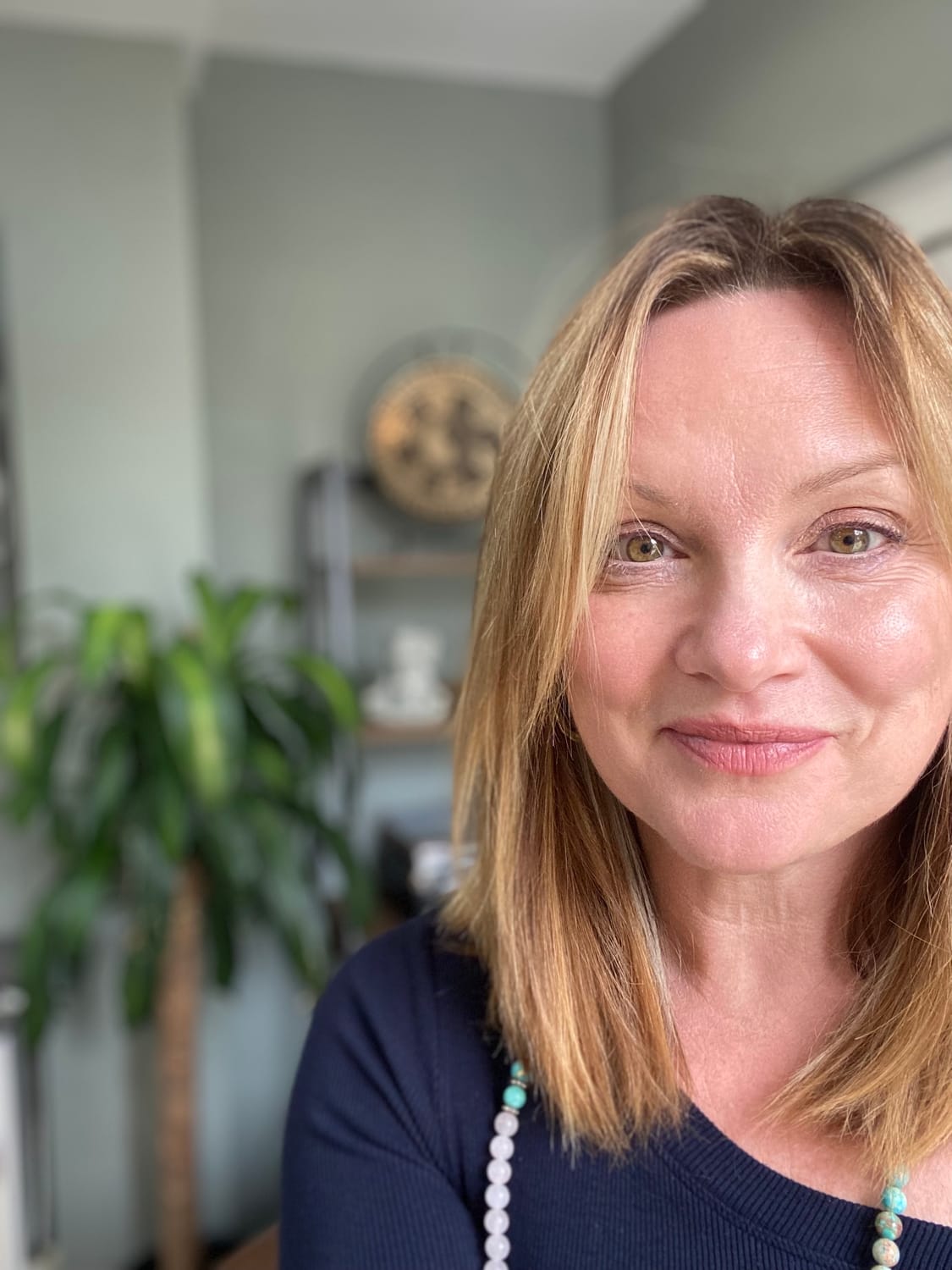
Paula Broadbent
I'm an organisational consultant and coach who brings business and psychology to real world issues. I'm on a mission to empower human-centred leadership in organisations, driving productivity through thriving teams.
I've over 20 years of experience working with senior leaders and their teams across sectors: financial services, construction, pharma, mutuals, hospitality.
My primary work is in the field with leaders navigating significant organisational change. I also serve as Programme Director for General Management at Cranfield School of Management.
I built the diagnostic tools and the framework underpinning Land Well because what I kept seeing was leaders who were capable, experienced, and genuinely committed; and still struggling, because the situation had changed faster than their responses had.
This work doesn't start with a model. It starts with an honest read of what is actually in front of you.
You ask, we answer
Questions worth asking.
How do I step up into a larger, more strategic role without ending up burnt out, overwhelmed, or a version of myself I don't recognise?
Most leaders in transition work harder. That's the default: more hours, more control, more effort applied to a situation that isn't yet fully understood. It feels like the responsible thing to do. It's also usually what makes the transition harder.
At this level, the job is not to do more. It's to focus on what only you can do from where you sit; because if you don't do it, no one will. The work that only you can see, only you can initiate, only you can hold. Everything else has somewhere else to go.
What actually determines whether you land well is two things: reading the situation you've walked into accurately (what you've inherited, where power actually sits, what the system is asking of you); and staying regulated enough to respond to what you see, rather than reacting to the pressure of being watched while you find your feet. Most transition support addresses one or the other. Land Well works on both at the same time, because that's what this moment requires.
That's worth paying attention to, not suppressing. There are leaders who have exactly the skills and judgment to step up, take on a broader remit, and make a real difference in their organisation; and who hesitate precisely because they've watched others do it badly. This work isn't about talking you into anything. It's designed to help you think it through clearly, on your own terms, with an honest read of what the role actually requires and what it will cost. If you do take it, the work is about doing it in a way that's sustainable for you: not replicating the patterns you've watched exhaust other people. Those patterns are a choice, even when they don't feel like one.
You'll know what you're looking for, and what you're not. Land Well is exploratory and non-directive: this isn't advice, and it isn't a programme with predetermined answers. What gives it focus is that it's anchored to a specific moment in your career (this transition, right now) and grounded in a clear diagnostic read of what that moment is actually asking of you. We work on what matters most right now and what will have the most impact for you; and we follow that as it develops. Non-directive coaching and diagnostic rigour, timed precisely to the transition.
We work around yours. Sessions at the start are deliberately short: enough to make progress without derailing a busy week. As the work deepens and you want to go further, sessions can go longer. The point is to build a rhythm that fits into real working life, not one that adds to the pressure. The leaders who get most from this are usually the busiest ones; the structure is designed with that in mind.
It's practical. The diagnostics exist specifically to keep the work anchored in what's actually happening in your context, not what's interesting to discuss in the abstract. If we're spending time on something, there's a reason, and you'll know what it is. The work does ask you to look honestly at your own patterns, because that's what makes it effective. Reflection that leads nowhere isn't the point; reflection that changes what you do next is.
If you're not engaging with the political side, the political side is engaging with you. That's not a criticism; it's how systems work. This isn't about becoming someone you're not or learning to play games. It's about understanding the system you're operating in clearly enough to navigate it deliberately, rather than being caught off guard or spending energy on moves that don't land because you misread the terrain. Reading the room is a skill, and it's one this work develops directly.
Personality tools have their place. The diagnostics used in Land Well are different in what they're measuring.
OrgBarometer isn't about who you are: it's about your context. It measures the conditions you've inherited (how clear the strategy is, whether the structure is working with you or against you, how engaged people actually are, whether leaders have what they need to act). That makes it situational and actionable in a way that profile-based tools aren't designed to be.
Autopilot sits above personality. It surfaces the automatic patterns your nervous system defaults to under pressure: the responses that run when you stop choosing deliberately. Most leaders recognise them immediately (working harder, controlling more, performing confidence, avoiding the difficult conversation). These patterns got you to where you are. The question is whether they're calibrated to where you're going. Understanding them isn't about changing who you are; it's about having a choice in the moment rather than running on autopilot when it matters most.
Over 20 years I've worked with senior leaders across financial services, construction, pharma, mutuals, hospitality and beyond. There's a reasonable chance I've coached or developed someone in a similar role or situation to yours, and where that experience is relevant, I'll bring it. At the same time, this is coaching, not mentoring or sector consultancy. Whether I know your industry or have held your specific job is not the basis on which this works. My role is to help you see yourself and your situation more clearly so you can make better decisions with the expertise you already have. The moment a coach starts telling you what to do, they've stopped coaching.
Chemistry matters, and I'd rather know early than have either of us invest in something that won't hold. It's why we start with a proper discovery call: not a pitch, a conversation. If it's not the right fit, I'll say so.
The fee for Land Well is modest relative to what's actually at stake. A senior hire typically costs 20-30% of salary in recruitment fees alone, before anyone has started. A failed or poorly-landed transition costs far more: in lost momentum, damaged relationships, and the patterns established in the first few months that can take years to unpick. Against that, the coaching investment is small. What you're paying for is a structured, diagnostic-led process with an experienced executive coach: not skills training, not something an AI tool replicates, not something a less experienced coach can deliver in the same way. The question isn't whether the fee is justified. It's whether you can afford not to land well.
The OrgBarometer gives you a structured baseline and, at the Integrated tier, a re-run at the end to track movement. That's useful if you want something concrete to point to.
Most leaders notice it before that. They notice it in the quality of the conversations they're having: the ones they'd been avoiding, the ones that used to go in circles, the ones where they can finally see what was actually going on. They notice it in their own reactions: catching a pattern before it runs, choosing a different response under pressure. They notice it when things that had been stuck for months start to move, and when the move came from them rather than from pushing harder. That's usually when it's clear the work is landing.
Often, you don't need to become someone else. You need to become more deliberately yourself.
Get in touch
If the timing is right, let's find out if this is the right fit.
A short conversation to understand where you are and what would be most useful. No obligation.